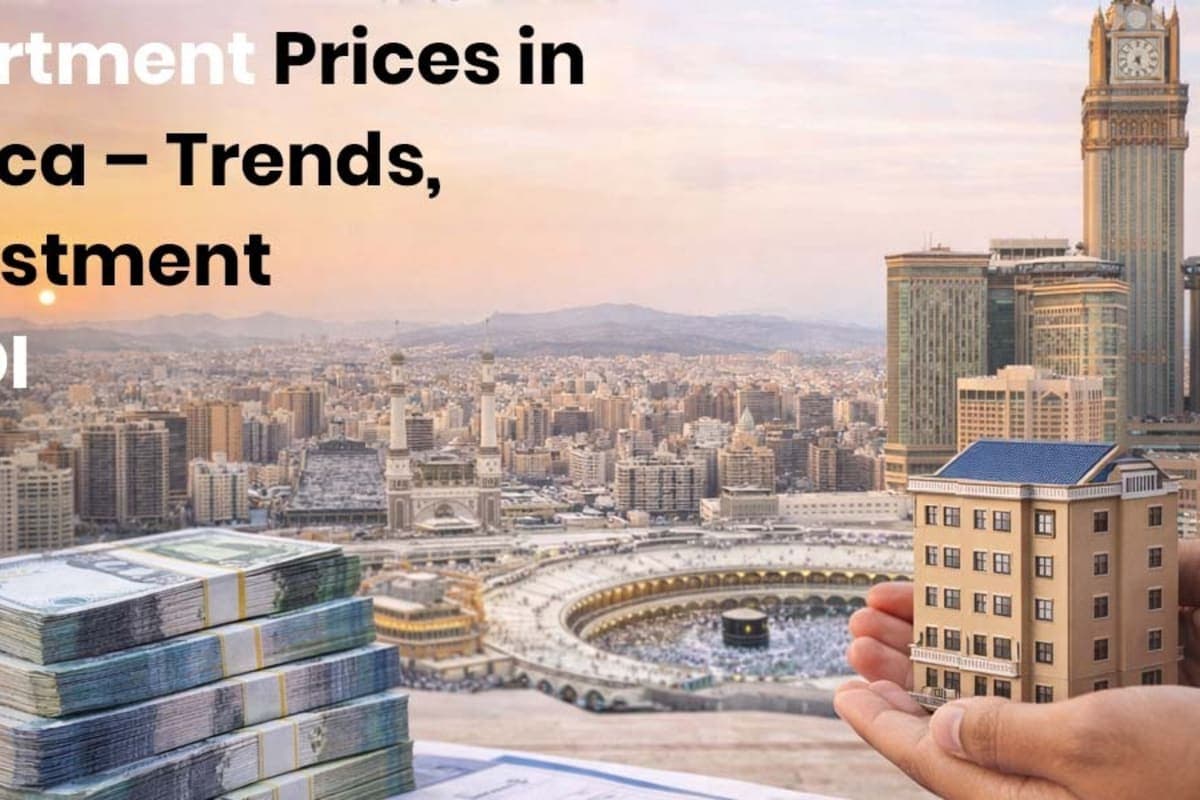
Apartment Prices in Mecca – Trends, Investment & ROI

Apartment Prices in Mecca – Trends, Investment & ROI
Mecca’s real estate market stands apart from any conventional property market, primarily because its demand is not purely economic—it is deeply rooted in religious significance and global pilgrimage patterns. This creates a level of stability and predictability that is rarely seen in other cities.
As of 2026, apartment prices in Mecca typically range from SAR 6,000 to SAR 35,000+ per square meter, depending largely on proximity to Al-Masjid al-Haram, building quality, and access to infrastructure. What makes the market particularly compelling is not just pricing, but the consistency of demand. With Saudi Arabia targeting over 30 million Umrah pilgrims annually under Vision 2030, housing demand is expected to expand steadily over the next decade.
For investors, Mecca offers a rare mix of short-term high-yield opportunities during pilgrimage seasons and stable long-term rental income, making it one of the most balanced real estate markets in the Kingdom.
Mecca Real Estate Market Overview (2026)
Unlike Riyadh or Jeddah, where population growth and corporate expansion drive housing demand, Mecca operates on a unique demand model tied to religious tourism. Every year, millions of pilgrims arrive for Hajj and Umrah, creating a constant need for accommodation across various price segments.
In recent years, the scale of this demand has become even more significant. Between 2024 and 2026, Mecca has consistently hosted around 18–20 million Umrah pilgrims annually, along with approximately 2.5 to 3 million Hajj pilgrims. This steady influx ensures that central areas near Haram maintain high occupancy rates throughout the year, while suburban districts benefit from long-term residential demand.
At the same time, government-led urban planning initiatives are gradually transforming Mecca into a more livable city. New residential zones, improved transport infrastructure, and better connectivity are expanding the housing market beyond its traditional central core.
Factors Affecting Apartment Prices in Mecca (2026)
Proximity to Haram – The Core Price Driver
The single most important factor influencing apartment prices in Mecca is distance from Al-Masjid al-Haram. Properties located within walking distance of the Haram are not only limited in supply but also hold immense religious and commercial value, making them the most expensive assets in the city.
In central districts such as Jabal Omar and Ajyad, prices per square meter typically range between SAR 25,000 and SAR 35,000, with premium units exceeding these levels depending on views and amenities. A standard two-bedroom apartment in these areas often starts from SAR 2.5 million, while larger or branded residences can easily cross SAR 4 million.
As one moves further away—toward areas like Aziziyah or Kudai—prices decrease significantly, often by 40–60%. This creates a natural pricing gradient across the city, allowing investors to choose between high-entry premium assets and more affordable properties with growth potential.
Religious Tourism & Seasonal Demand
The dynamics of Mecca’s property market are heavily influenced by the cycles of religious tourism. Unlike most cities, where rental demand fluctuates with economic conditions, Mecca benefits from a consistent and predictable inflow of visitors throughout the year.
During peak periods such as Hajj and Ramadan, rental demand intensifies dramatically. Occupancy levels in central districts often reach nearly 100%, and rental rates can increase by 300% to 500% compared to off-season pricing. For many property owners, this means that a significant portion of their annual rental income can be generated within just a few months.
However, what makes the market particularly resilient is its off-season stability. Suburban districts such as Al Awali and Al Naseem remain occupied by long-term tenants, including healthcare workers, hospitality staff, and local families. This ensures that even outside peak pilgrimage periods, rental income remains steady.
Vision 2030 & Urban Transformation
Vision 2030 has introduced a new phase of development for Mecca, shifting its identity from a purely pilgrimage-focused destination to a modern, well-planned urban city. Government-backed initiatives have focused on improving housing availability, infrastructure, and overall livability.
Projects such as Al Awali and Al Naseem have been designed as family-oriented residential zones, offering wider roads, better amenities, and improved access to essential services. At the same time, public-private partnerships are encouraging developers to build mixed-use communities that combine residential, commercial, and hospitality spaces.
This transformation is gradually changing the nature of housing demand in Mecca. While short-term rental demand remains strong, there is now a growing segment of long-term residents who are contributing to a more stable and diversified property market.
Infrastructure & Connectivity Impact
Infrastructure development has become one of the most important factors shaping Mecca’s real estate landscape. Improved connectivity is not only enhancing accessibility to Haram but also increasing the value of previously overlooked districts.
The expansion of the Mecca Metro, along with projects such as the King Abdulaziz Road redevelopment and the Western Ring Road, has significantly reduced travel time across the city. Areas like Al Shara’i and Tayseer, which were once considered peripheral, are now becoming increasingly attractive due to better connectivity.
Between 2023 and 2026, these emerging districts have already recorded price appreciation of approximately 15–20%, highlighting the direct impact of infrastructure on property values. As connectivity continues to improve, demand is expected to spread further outward, creating new investment opportunities.
Mortgage & Financing Trends
The availability of financing has also played a key role in driving property demand in Mecca. According to recent data from the Saudi Central Bank, mortgage lending has grown steadily, supported by government initiatives aimed at increasing homeownership.
Buyers today can access financing with loan-to-value ratios of up to 85%, interest rates ranging between 5% and 6%, and repayment periods extending up to 25 years. These favorable conditions have made property ownership more accessible, particularly for mid-income buyers.
Additionally, digital platforms such as Ejar and Najiz have improved transparency and security in real estate transactions. These systems ensure that both rental agreements and ownership records are properly documented, reducing risk for investors and buyers.
Average Apartment Prices in Mecca (2026)
While prices vary depending on multiple factors, the following table provides a realistic snapshot of the market across key districts:
Location | Avg Price (SAR/sq.m) | 2-Bedroom Avg | 3-Bedroom Avg |
|---|---|---|---|
Central Mecca (Near Haram) | 20,000 – 35,000 | SAR 2.5M+ | SAR 3.5M+ |
Aziziyah | 10,000 – 15,000 | SAR 1M – 1.8M | SAR 2M |
Al Awali / Al Naseem | 8,000 – 12,000 | SAR 800K – 1.5M | SAR 1.8M |
Al Shara’i / Tayseer | 6,000 – 9,000 | SAR 700K – 1.2M | SAR 1.4M |
These figures represent average benchmarks, and actual prices may vary depending on building quality, amenities, and exact location.
Best Areas to Buy Apartments in Mecca (2026)
Choosing the right location is one of the most important decisions for any investor entering the Mecca market. Each district offers a different balance between price, accessibility, and return potential.
Aziziyah remains one of the most balanced investment zones, offering proximity to Haram at relatively affordable prices. It is particularly attractive for investors seeking consistent rental income without the high entry cost of central areas.
Al Awali has developed into a modern residential hub, appealing to families and long-term residents. Its planned infrastructure and lower congestion make it ideal for stable leasing strategies.
Jabal Omar continues to dominate the premium segment, offering luxury apartments with direct Haram access. While entry prices are high, the potential for rental income and capital appreciation is equally strong.
Al Naseem benefits from improved connectivity and infrastructure, making it a growing choice for professionals and families. Meanwhile, Al Shara’i represents one of the most promising emerging zones, with lower entry prices and strong future growth potential.
ROI & Rental Yield in Mecca (2026)
From an investment perspective, Mecca offers competitive returns compared to other major cities in Saudi Arabia. Rental yields typically range between 4% and 8%, depending on location and property type.
Central areas tend to deliver returns in the range of 5% to 7%, driven by high demand from pilgrims. Mid-range districts such as Aziziyah can achieve slightly higher yields of 6% to 8%, making them attractive for investors seeking balanced returns.
Suburban areas like Al Awali and Al Naseem offer lower but more stable returns, while emerging zones such as Al Shara’i provide a combination of moderate yields and strong appreciation potential.
Buying Property in Mecca: Rules for Expats
Foreign ownership in Mecca is possible, but it is subject to regulatory conditions. Expatriates can purchase property in approved zones, provided they hold valid residency and obtain the necessary approvals.
Financing options are widely available through major Saudi banks, allowing buyers to secure up to 85% of the property value. All transactions are recorded through digital platforms such as Najiz, ensuring transparency and legal protection.
These regulations are designed to balance investment opportunities with the city’s religious and cultural significance.
Mecca Real Estate Forecast (2026–2030)
Looking ahead, the outlook for Mecca’s property market remains strong. With ongoing infrastructure development, increasing pilgrimage numbers, and continued government investment, the market is expected to grow steadily over the next five years.
Price appreciation of 20% to 30% by 2030 is considered realistic, particularly in areas benefiting from improved connectivity and urban expansion. Central zones will continue to maintain their premium status, while emerging districts are likely to see faster percentage growth.
Final Thoughts: Should You Invest in Mecca Apartments?
Mecca is not just another real estate market—it is one of the few cities in the world where demand is both emotionally driven and economically sustainable. The combination of limited land near Al-Masjid al-Haram, a continuously growing global pilgrim base, and Vision 2030-led urban expansion creates a foundation for long-term value that is difficult to replicate elsewhere.
From an investment perspective, Mecca offers a rare balance. Central properties near the Haram provide strong seasonal income and long-term capital preservation, while emerging districts such as Al Shara’i and Al Awali present opportunities for early entry and future appreciation. This flexibility allows investors to align their strategy—whether focused on yield, stability, or growth—with the right location.
What we consistently observe while working with buyers and investors across Saudi Arabia is that Mecca is often not just a financial decision. It becomes a strategic long-term asset, where returns are supported by one of the most predictable demand systems in the world.
At RealEstateSaudi our approach goes beyond listings. We work closely with investors to identify the right property based on budget, ROI expectations, legal eligibility, and long-term goals. Whether you are considering a Haram-facing premium apartment or a growth-focused investment in developing districts, our team provides end-to-end guidance—from market insights to documentation and financing support.
If you are planning to explore opportunities in Mecca, the right timing and the right property selection can make a significant difference.
📞 For personalized consultation and verified property options, connect with our team directly
🌐 Visit: www.RealEstateSaudi.com
RealEstateSaudi — Your Trusted Partner for Saudi Property Investment under Vision 2030.