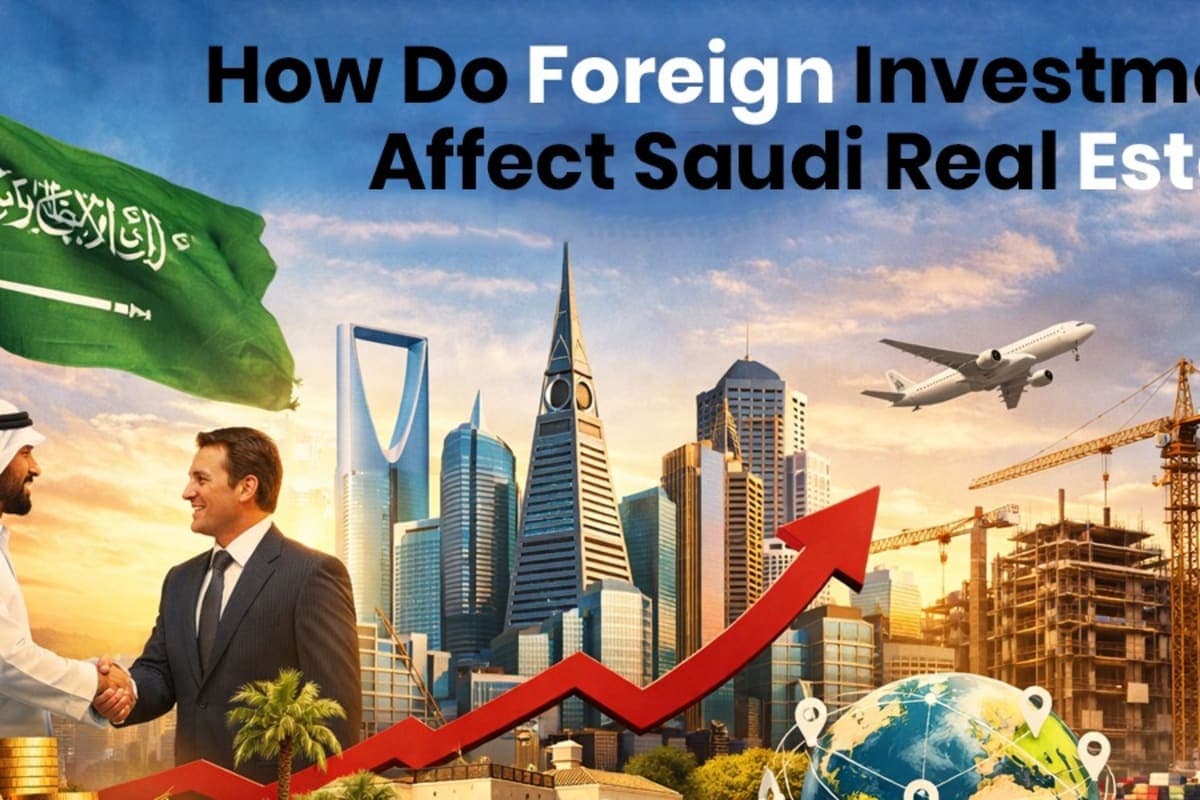
Foreign Investors to Gain Full Ownership Rights in Saudi Arabia by 2026

Saudi Arabia is set to introduce one of the most transformative reforms in its real estate sector, with full ownership rights for foreign investors expected to be implemented starting January 2026. This landmark policy shift is designed to significantly enhance the Kingdom’s appeal as a global investment destination and accelerate the growth of its property market.
Under this reform, foreign nationals will be permitted to own real estate assets outright in approved zones across the Kingdom, marking a major departure from earlier restrictions that limited ownership or required local partnerships. Strategic locations such as Riyadh, Jeddah, and key economic zones are expected to see increased demand, while regulated access mechanisms may also expand exposure to high-demand cities like Makkah and Madinah.
This policy aligns closely with Saudi Arabia’s Vision 2030 strategy, which focuses on economic diversification, increasing foreign direct investment, and strengthening the role of the private sector. By opening the real estate market to global investors, the Kingdom is positioning itself as a competitive and transparent property investment hub in the Middle East.
In a historic move poised to reshape the Middle East’s property market, Saudi Arabia has formally announced that, effective January 2026, foreign investors will be allowed full ownership of real estate assets across the Kingdom under defined regulatory frameworks. This reform is expected to unlock new levels of investment activity, particularly in residential, commercial, and mixed-use developments.
The policy will provide foreign investors with direct ownership rights in key urban and economic zones, eliminating many of the barriers that previously restricted participation. While sensitive regions such as Makkah and Madinah may continue to operate under specific regulatory conditions, structured investment channels are likely to expand access through regulated mechanisms.
This sweeping reform is fully aligned with Vision 2030, Saudi Arabia’s long-term economic transformation plan aimed at reducing dependence on oil and building a diversified, globally integrated economy. The introduction of full ownership rights is expected to:
• Increase foreign direct investment (FDI) inflows into the real estate sector
• Accelerate development of residential and commercial projects across major cities
• Enhance market transparency and investor confidence
• Strengthen Saudi Arabia’s positioning as a global real estate investment destination
As the Kingdom continues to modernize its legal and regulatory frameworks, this reform represents a critical step toward creating a more open, accessible, and investor-friendly real estate ecosystem.
A New Era of Real Estate Investment
Foreign ownership in Saudi Arabia’s real estate sector is entering a transformative phase in 2026, as new legislation removes long-standing restrictions and enables direct property ownership for international investors across multiple asset classes. Historically, foreign participation was limited to specific economic zones or indirect ownership through corporate structures. The upcoming reforms eliminate these barriers, significantly expanding market accessibility.
This shift allows foreign investors to participate directly in a wide range of real estate opportunities, including both income-generating and long-term capital appreciation assets. The opening of the market is expected to create a more competitive, liquid, and globally integrated real estate environment.
Foreign investors will now be able to access:
• Residential real estate: Including villas, apartments, second homes, and integrated community housing developments
• Commercial properties: Such as office towers, retail centers, business districts, and mixed-use developments
• Industrial assets: Warehouses, logistics hubs, manufacturing facilities, and supply chain infrastructure
• Hospitality and tourism assets: Hotels, resorts, branded residences, and leisure-focused developments
With this liberalization, Saudi Arabia is positioning itself as a dynamic and investor-friendly real estate market, capable of attracting global capital across diverse property segments.
Makkah and Madinah: Structured Access to Holy Cities
One of the most significant aspects of the 2026 reform is the controlled and structured opening of Makkah and Madinah to foreign real estate investment. As the two holiest cities in Islam, these regions have historically been restricted exclusively to Saudi ownership. The introduction of regulated access marks a major policy evolution while maintaining strict cultural and religious safeguards.
Although direct ownership may remain limited in certain areas, the new framework is expected to allow indirect and structured investment participation, particularly in large-scale development projects and commercial real estate assets. This approach balances economic growth with the preservation of the cities’ spiritual significance.
Key Regulations
The regulatory framework governing foreign investment in these cities is designed to ensure compliance with religious, cultural, and legal standards while enabling controlled capital inflow.
• Ownership Scope: Limited primarily to commercial real estate projects and approved development zones
• Usage Restrictions: Clear guidelines to ensure developments align with local values, urban planning norms, and religious sensitivities
• Joint Ventures: Co-ownership structures with Saudi partners may be required in strategically sensitive zones
• Regulatory Oversight: Full compliance with national laws, including religious, municipal, and legal frameworks
These provisions aim to safeguard the cultural and spiritual integrity of Makkah and Madinah, while still unlocking economic potential through carefully regulated real estate investment opportunities.
Strategic Importance for Global Investors
The opening of Saudi Arabia’s real estate market to full foreign ownership in 2026 represents a major strategic shift with global implications, positioning the Kingdom alongside leading international investment destinations. For global investors, this reform unlocks direct access to one of the fastest-growing real estate markets in the Middle East, backed by strong economic fundamentals and government support.
Foreign investors stand to benefit significantly from this transformation, as the market evolves into a more open, transparent, and diversified ecosystem designed to attract long-term capital.
1. Unrestricted Market Entry
Saudi Arabia’s reform places the Kingdom in the same league as established global property markets such as Dubai, Singapore, and London, where foreign ownership is widely permitted. This move removes traditional barriers and allows investors to participate directly in real estate ownership without complex local structures.
Foreign buyers will now have:
• Direct access to purchase and hold freehold properties in approved zones
• Greater legal clarity and ownership protection under defined regulatory frameworks
• Simplified entry into one of the region’s most rapidly expanding property markets
This unrestricted access significantly enhances the attractiveness of Saudi Arabia as a global real estate investment destination.
2. Diversified Portfolio Options
The Saudi real estate market offers a wide range of investment opportunities across multiple asset classes, enabling investors to build diversified portfolios aligned with different risk and return profiles.
Investment potential spans across:
• High-end residential properties in NEOM, The Red Sea Project, and Riyadh, offering premium lifestyle and long-term appreciation
• Grade A commercial office spaces in expanding financial districts driven by corporate growth
• Retail and mixed-use developments in major cities such as Jeddah and Dammam, benefiting from rising consumer demand
• Warehousing and fulfillment centers supporting the Kingdom’s rapidly growing digital and logistics economy
This diversity allows investors to tap into both income-generating assets and high-growth development opportunities, making Saudi Arabia a balanced and attractive market for global capital.
3. Transparent, Investor-Friendly Environment
The introduction of full ownership rights is supported by a series of structural improvements aimed at creating a more transparent, secure, and investor-friendly real estate ecosystem. These reforms are critical in building long-term trust and aligning Saudi Arabia with global investment standards.
Key improvements include:
• E-title deed systems ensuring secure and verifiable ownership records
• Digital land registration platforms enabling faster and more efficient transactions
• Dispute resolution frameworks providing legal protection and investor confidence
• Attractive tax structures and residency-linked investment programs enhancing overall returns
Together, these initiatives are transforming Saudi Arabia into a modern, well-regulated, and globally competitive real estate market, capable of attracting institutional and private investors alike.
Sector-Wise Investment Opportunities
Saudi Arabia’s real estate market opening in 2026 is creating multi-sector investment opportunities across high-growth asset classes, allowing foreign investors to strategically diversify their portfolios. The market is no longer limited to residential demand but spans commercial, hospitality, and industrial ecosystems aligned with Vision 2030 development goals.
Residential Real Estate
The residential segment remains the most active and accessible investment category, driven by population growth, urban expansion, and increasing demand for modern housing solutions. With government-backed housing initiatives and improved financing options, this sector offers both stability and long-term appreciation potential.
• Metro-centric apartments in Riyadh and Jeddah, catering to growing urban populations and working professionals
• Villas and gated communities near economic zones, offering premium living standards and strong capital appreciation
• Off-plan projects within mega-developments, providing early-stage entry with high ROI potential
Commercial and Office Properties
Commercial real estate is expanding rapidly as Saudi Arabia strengthens its position as a regional business hub. The influx of multinational companies and regulatory mandates for local headquarters are driving demand for high-quality office and retail infrastructure.
• Business towers targeting international corporations and financial institutions
• Retail hubs and mixed-use developments serving rapidly urbanizing populations
This segment offers strong rental yields and long-term leasing opportunities, particularly in prime business districts.
Hospitality and Leisure
Tourism-driven real estate is emerging as one of the most lucrative investment segments, supported by Saudi Arabia’s ambition to become a global tourism destination. The sector is benefiting from increased international visitor inflow and large-scale tourism infrastructure projects.
• Full ownership opportunities in world-class resorts, hotels, and branded residences
• Development of health tourism centers, golf resorts, and desert-based luxury destinations
This segment is expected to generate high returns through both short-term rental income and long-term asset appreciation.
Industrial, Logistics & Warehousing
The industrial and logistics sector is witnessing rapid growth, fueled by e-commerce expansion, supply chain transformation, and infrastructure upgrades across the Kingdom. This segment is becoming increasingly attractive for institutional investors.
• Logistics parks and warehousing facilities along key supply chain corridors
• Fulfillment centers supporting e-commerce platforms and retail distribution networks
• Cold chain logistics infrastructure for pharmaceutical and food supply industries
With Saudi Arabia positioning itself as a regional logistics hub, this segment offers strong long-term demand and scalability.
Economic Impact of the Reform
The introduction of 100% foreign ownership in Saudi Arabia’s real estate sector is expected to generate significant economic benefits across multiple dimensions, reinforcing the Kingdom’s transition toward a diversified and investment-driven economy.
Key economic impacts include:
• Massive FDI inflow, with billions in new capital expected from global institutional and private investors
• Urban planning acceleration, enabling faster development of giga-projects and large-scale city transformation initiatives
• Technology transfer, bringing global best practices in architecture, construction, and smart infrastructure development
• Job creation across real estate, construction, tourism, and supporting service industries
Additionally, developments near key pilgrimage and tourism zones are expected to introduce hybrid real estate models, combining residential, hospitality, and religious tourism infrastructure. This integrated approach will further enhance the Kingdom’s ability to attract global investment while maintaining cultural and economic balance.
Investor Checklist: What to Do in 2026
To effectively capitalize on Saudi Arabia’s real estate market opening in 2026, investors must take a strategic and well-informed approach. Early positioning, regulatory understanding, and strong local partnerships will be critical to maximizing returns in this rapidly evolving market.
Below are key steps that prospective investors should follow:
1. Hire Local Experts
Navigating Saudi Arabia’s real estate market requires a clear understanding of local regulations, legal frameworks, and investment procedures. Engaging experienced professionals can significantly reduce risks and improve decision-making.
• Work with licensed real estate consultants and legal advisors familiar with Saudi property laws and foreign ownership regulations
• Explore Premium Residency visa programs to support long-term investment and residency benefits
2. Scout Strategic Locations
Identifying high-growth locations is essential for achieving strong returns. Investors should focus on areas aligned with Vision 2030 developments and infrastructure expansion.
• Target high-growth corridors such as NEOM, King Salman Park, Diriyah Gate, and Qiddiya
• Conduct detailed due diligence, including feasibility studies, market demand analysis, and long-term growth projections
3. Arrange Financing
Understanding financing options is crucial for structuring investments efficiently and ensuring compliance with local financial regulations.
• Approach local and international banks offering mortgage and property financing solutions for foreign investors
• Evaluate tax implications, financing costs, and compliance structures before finalizing investments
4. Build Partnerships
Strong local partnerships can provide access to better opportunities, smoother transactions, and regulatory clarity within the Saudi market.
• Collaborate with licensed developers, real estate brokers, and Saudi co-investors
• Leverage local networks to identify off-market deals and early-stage investment opportunities
Aligning with Vision 2030 and Global Trends
Saudi Arabia’s real estate reform is a key milestone within the broader Vision 2030 strategy, aimed at transforming the Kingdom into a diversified, globally competitive economy. The opening of the real estate sector to foreign investors directly supports several national objectives.
Key strategic alignments include:
• Economic liberalization through expansion of real estate, tourism, and private sector participation
• Development of modern housing infrastructure to meet the needs of a growing population
• Achievement of global tourism targets, including attracting over 100 million annual visitors by 2030
In addition, the integration of real estate with tourism, infrastructure, and digital innovation is creating a future-ready investment ecosystem. With strong policy backing and high-growth potential, Saudi Arabia is rapidly emerging as a global real estate investment magnet for long-term investors.
Conclusion: The Time to Act Is Now
The opening of Saudi Arabia’s real estate market to full foreign ownership in 2026 marks a generational investment opportunity. From high-rise residential developments in Riyadh to luxury tourism projects along the Red Sea and rapidly expanding logistics hubs, the Kingdom is entering a new phase of global real estate relevance.
By removing ownership barriers, streamlining regulatory processes, and introducing investor-friendly policies, Saudi Arabia is clearly signaling its intent to become a leading destination for international real estate investment. The combination of Vision 2030 execution, infrastructure expansion, and growing foreign participation is creating a market environment that is both dynamic and future-focused.
For investors, early entry will be key. Establishing the right advisory network, securing financing, and identifying strategic locations in advance can provide a significant first-mover advantage as the market continues to evolve.
Saudi real estate is transforming at scale—offering opportunities across residential, commercial, hospitality, and industrial sectors. The question is no longer whether to invest, but how early you position yourself in this high-growth market.
RealEstateSaudi stands as your trusted research and investment intelligence platform, providing in-depth market analysis, regulatory clarity, and strategic insights tailored for global investors. From understanding ownership laws to identifying high-ROI opportunities across cities like Riyadh, Jeddah, NEOM, and the Red Sea region, our platform helps you make data-driven and legally informed investment decisions.
If you are planning to enter Saudi Arabia’s real estate market, now is the time to act with the RealEstateSaudi For Best Support.