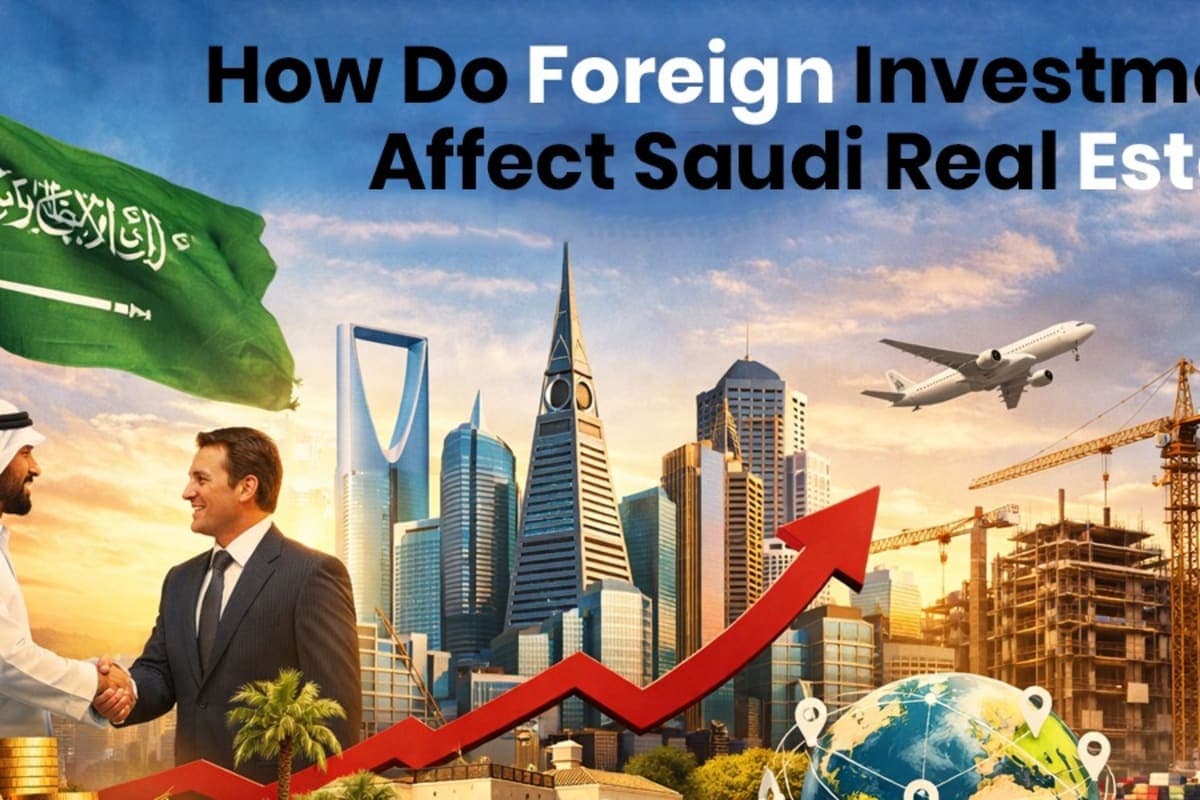
How Do Foreign Investments Affect Saudi Real Estate?

The Concept of Foreign Investments in Saudi Arabia
Foreign investment in Saudi Arabia refers to capital inflows from international investors into the Kingdom’s economy—primarily through direct ownership of assets, joint ventures, strategic partnerships, or institutional funding across sectors such as real estate, infrastructure, tourism, and logistics. In the context of real estate, foreign investment plays a critical role in accelerating large-scale developments, enhancing urban infrastructure, and increasing the overall market value of properties across key cities like Riyadh, Jeddah, and Dammam.
In recent years, Saudi Arabia has actively positioned itself as a global investment destination by introducing investor-friendly reforms, improving regulatory transparency, and enabling easier market access for international buyers. With upcoming 2026 policy expansions—especially around foreign property ownership rights—the Kingdom is transitioning from a restricted investment environment to a more open, competitive, and globally integrated real estate ecosystem.
Foreign investments typically enter the Saudi real estate market through multiple structured channels, including:
• Direct property acquisition in approved investment zones and mega-project developments
• Joint ventures with Saudi developers and real estate companies
• Institutional investments via real estate funds and REITs (Real Estate Investment Trusts)
• Strategic participation in Vision 2030 giga-projects such as NEOM, The Red Sea Project, and Diriyah Gate
This inflow of global capital is not just financial it also brings advanced construction technologies, international design standards, and global best practices in property management, sustainability, and smart infrastructure.
Importantly, foreign investment is deeply aligned with Saudi Arabia’s Vision 2030 strategy, which focuses on reducing oil dependency and diversifying the economy through sectors like real estate, tourism, and urban development. Real estate, in particular, has emerged as one of the most attractive sectors due to:
• Rapid urbanization and population growth
• Increasing demand for residential and mixed-use developments
• Expansion of business hubs and financial districts
• Growth in tourism-driven infrastructure and hospitality assets
As regulatory barriers continue to ease and ownership rights expand in 2026, foreign investors are expected to play an even more dominant role in shaping Saudi Arabia’s real estate landscape—making it one of the fastest-growing and most strategically important property markets globally.
Types of Foreign Investment in the Real Estate Sector
Saudi Arabia’s real estate sector has entered a new phase of global integration, with foreign investment playing a central role in shaping its growth trajectory. Backed by Vision 2030, regulatory liberalization, and increasing international confidence, the Kingdom is witnessing diversified capital inflows across residential, commercial, and tourism-driven developments.
In 2026, foreign participation is expected to accelerate further due to expanded ownership rights, improved legal frameworks, and the rise of giga-projects. This transformation is not only increasing transaction volumes but also elevating the overall quality, scale, and sophistication of real estate developments across key urban and economic zones.
Foreign investments in Saudi real estate are structured across multiple asset classes, each addressing specific market needs while contributing to long-term economic diversification. These investments can be broadly categorized into three major segments:
Residential Investments
Residential real estate continues to dominate foreign investment interest, driven by strong demographic growth, rapid urbanization, and rising demand for quality housing. Major cities like Riyadh, Jeddah, and Dammam are experiencing sustained expansion, supported by infrastructure upgrades and government-backed housing initiatives.
Foreign investors are actively participating in residential developments such as villas, apartments, gated communities, and large-scale housing projects designed for both ownership and rental markets. These developments are increasingly aligned with modern urban planning standards, offering integrated community living, sustainability features, and smart technologies.
Key factors driving residential investments include:
• Growing demand from a young and expanding Saudi population
• Increasing expatriate presence in urban economic hubs
• Government programs promoting home ownership and housing accessibility
• Expansion of metro networks and smart city infrastructure
With expected 2026 reforms enabling broader foreign ownership access, residential real estate is positioned to deliver stable returns, strong rental yields, and long-term capital appreciation.
Commercial Investments
Commercial real estate represents a strategic pillar of Saudi Arabia’s economic transformation, attracting foreign capital into high-value business infrastructure. This segment includes office spaces, financial districts, retail developments, and mixed-use projects that support the Kingdom’s ambition to become a global business and investment hub.
Riyadh is emerging as a leading commercial center in the Middle East, driven by initiatives requiring multinational companies to establish regional headquarters in Saudi Arabia. This has significantly increased demand for Grade A office spaces, modern business environments, and integrated commercial ecosystems.
Key growth drivers in commercial investments include:
• Development of premium office towers and financial hubs
• Expansion of retail malls and experiential lifestyle destinations
• Rise of mixed-use developments combining business, retail, and residential spaces
• Increasing presence of global corporations and institutional investors
These investments contribute directly to job creation, business expansion, and the diversification of Saudi Arabia’s non-oil economy, making commercial real estate a high-impact investment segment.
Tourism and Hospitality Investments
Tourism and hospitality have rapidly emerged as one of the most dynamic segments within Saudi Arabia’s real estate market. Under Vision 2030, the Kingdom aims to attract over 100 million annual visitors, creating massive demand for hotels, resorts, serviced apartments, and integrated tourism infrastructure.
Foreign investors are playing a crucial role in developing world-class hospitality assets across key destinations, including NEOM, The Red Sea Project, Diriyah Gate, and AlUla. These developments are redefining Saudi Arabia’s global positioning as a luxury, cultural, and experiential tourism destination.
Key drivers of tourism and hospitality investments include:
• Rapid expansion of leisure, cultural, and religious tourism
• Development of luxury resorts, branded residences, and eco-tourism destinations
• Growing demand for short-term rentals and serviced accommodations
• Integration of entertainment, lifestyle, and tourism infrastructure
This segment offers high-return potential, driven by increasing international footfall, strong government support, and long-term infrastructure investments.
Collectively, these three investment categories are transforming Saudi Arabia’s real estate landscape—enhancing urban infrastructure, improving quality of life, and expanding investment opportunities across the Kingdom. As regulatory frameworks continue to evolve and foreign ownership becomes more accessible in 2026 and beyond, international investors will play an even more critical role in driving sustainable growth and positioning Saudi Arabia as a leading global real estate investment destination.
The Impact of Foreign Investments on the Saudi Real Estate Market
Foreign investment has become a transformative force in Saudi Arabia’s real estate sector, significantly influencing market dynamics, development quality, pricing trends, and overall investor sentiment. With the Kingdom opening its market further in 2026, the impact of foreign capital is becoming more visible across both opportunities and challenges.
This influence extends beyond financial inflows—it includes technological advancement, global design standards, and improved transparency, all of which are reshaping Saudi Arabia into a globally competitive real estate market.
(H3) Positive Aspects
Foreign investments have played a critical role in accelerating the growth and modernization of Saudi Arabia’s real estate sector. By injecting substantial capital into the market, international investors are enabling large-scale developments that align with global standards in construction, sustainability, and urban planning.
One of the most significant advantages is the rapid expansion of mega and master-planned projects across cities like Riyadh, Jeddah, and emerging zones such as NEOM and The Red Sea Project. These developments are not only increasing supply but also improving the overall quality of real estate offerings in the Kingdom.
Key positive impacts of foreign investment include:
• Increased capital inflow supporting large-scale infrastructure and property development
• Adoption of international construction standards, smart technologies, and sustainable design practices
• Enhanced competition among developers, leading to better quality and innovation
• Growth in real estate transaction volumes and overall market liquidity
• Job creation across construction, facility management, and real estate services
Additionally, foreign investments strengthen investor confidence by signaling global trust in Saudi Arabia’s economic reforms. This encourages both institutional and retail investors to participate in the market, further boosting long-term stability and growth.
Potential Drawbacks
While foreign investments bring substantial benefits, they also introduce certain challenges that need to be managed through effective regulation and balanced policy frameworks. As the market becomes more open in 2026, addressing these concerns will be crucial to maintaining sustainable growth.
One of the primary concerns is the potential rise in property prices, particularly in high-demand urban areas. Increased foreign demand can drive up valuations, making housing less affordable for local residents and creating pressure on middle-income buyers.
Key potential drawbacks include:
• Rising property prices in prime locations due to increased foreign demand
• Concentration of investments in major cities, leading to regional development imbalance
• Increased reliance on foreign developers and companies for project execution
• Risk of market speculation and short-term investment behavior
• Possible mismatch between imported real estate models and local cultural or societal needs
To address these challenges, Saudi Arabia is actively strengthening its regulatory environment, ensuring that foreign investment aligns with national priorities, urban planning standards, and cultural considerations.
Balanced policies—such as controlled ownership zones, compliance requirements, and local partnership frameworks are helping maintain equilibrium between economic openness and domestic market stability.
Examples of Real Estate Projects with Foreign Investments
Saudi Arabia’s real estate transformation is best reflected through its large-scale mega projects and urban developments, many of which are backed by significant foreign investments and global partnerships. These projects highlight how international capital, expertise, and innovation are actively shaping the Kingdom’s future real estate landscape.
One of the most prominent examples is NEOM, a $500 billion futuristic city project that represents the centerpiece of Saudi Arabia’s Vision 2030. NEOM has attracted global investors, technology partners, and real estate developers, contributing to the development of smart cities, sustainable infrastructure, and next-generation living environments.
Another major project is The Red Sea Project, a luxury tourism destination being developed along Saudi Arabia’s western coastline. With strong participation from international investors, this project focuses on eco-tourism, high-end resorts, and sustainable development practices, positioning Saudi Arabia as a global tourism hub.
Qiddiya, the Kingdom’s entertainment and cultural capital, is also a key example of foreign collaboration. This project combines residential, commercial, and entertainment real estate, attracting global developers and investors into sectors such as leisure, sports infrastructure, and mixed-use developments.
Diriyah Gate is another landmark development, transforming a historic site into a world-class cultural and lifestyle destination. With international investment and partnerships, it integrates heritage preservation with modern real estate development, including luxury residences, hospitality assets, and retail spaces.
In major urban centers like Riyadh, Jeddah, and Dammam, foreign investments are also driving the development of smart residential communities, financial districts, and modern commercial hubs. These projects demonstrate how international capital is not only funding real estate growth but also introducing global standards in planning, design, and sustainability.
Collectively, these examples highlight the critical role of foreign investment in accelerating Saudi Arabia’s real estate expansion, enhancing infrastructure, and positioning the Kingdom as a leading global investment destination.
Regulatory and Legislative Framework
Saudi Arabia has established a strong and evolving regulatory framework to support foreign investment in the real estate sector while ensuring transparency, stability, and compliance with national priorities. As the Kingdom moves toward expanded foreign ownership policies in 2026, the legal environment is becoming more structured, investor-friendly, and globally aligned.
One of the key developments is the gradual liberalization of foreign property ownership laws, allowing non-Saudi investors to own real estate in designated zones, economic cities, and major development projects under defined conditions. These reforms aim to balance market accessibility with controlled and sustainable growth.
The Ministry of Investment (MISA) plays a central role in facilitating foreign investment by simplifying licensing procedures, providing investor support services, and promoting Saudi Arabia as a global investment destination. These initiatives have significantly reduced entry barriers and improved ease of doing business for international investors.
Additionally, the Real Estate General Authority (REGA) has been established to regulate the sector, ensuring transparency, compliance, and protection for all stakeholders. REGA oversees property transactions, licensing, and regulatory enforcement, strengthening trust in the market.
Key elements of the regulatory framework include:
• Defined ownership regulations for foreign investors in approved zones and projects
• Streamlined licensing and investment approval processes
• Enhanced transparency through digital property registration systems
• Legal safeguards to protect investor rights and ensure fair transactions
• Alignment with Vision 2030 goals for sustainable and diversified economic growth
As Saudi Arabia continues to refine its legal and regulatory systems, the real estate sector is becoming increasingly secure and attractive for global investors. This structured framework ensures that foreign investment contributes to long-term economic development while maintaining market stability and protecting national interests.
Start Your Real Estate Investment Journey in Saudi Arabia with Real Estate Saudi
If you’re planning to enter the Saudi Arabia real estate market in 2026, having the right guidance and market intelligence is critical. Real Estate Saudi stands as a trusted research-driven platform designed to help global investors understand, evaluate, and confidently invest in one of the fastest-growing property markets in the world.
With Saudi Arabia opening its real estate sector to foreign ownership and large-scale international participation, investors now have access to opportunities across residential, commercial, tourism, and mixed-use developments. However, navigating regulations, identifying high-growth locations, and understanding long-term ROI requires deep market expertise.
At Real Estate Saudi, we provide:
• In-depth market research and data-driven investment insights
• City-wise analysis covering Riyadh, Jeddah, NEOM, and emerging hubs
• Guidance on foreign ownership laws, eligibility, and compliance
• Strategic insights on high-growth sectors such as tourism, logistics, and luxury residential
• Long-term investment outlook aligned with Vision 2030 developments
Whether you are an individual investor, institutional buyer, or global developer, our platform is built to help you make informed decisions based on real market trends—not speculation. From understanding property laws to evaluating ROI potential and future growth corridors, we simplify the entire investment journey.
As Saudi Arabia continues its rapid transformation into a global real estate and investment hub, early movers stand to benefit the most. With expanding foreign ownership rights, increasing infrastructure investments, and rising global demand, the Kingdom presents a unique window of opportunity for forward-looking investors.
Stay informed, explore opportunities, and make confident investment decisions with Real Estate Saudi—your trusted authority for Saudi Arabia real estate research, insights, and investment guidance.
